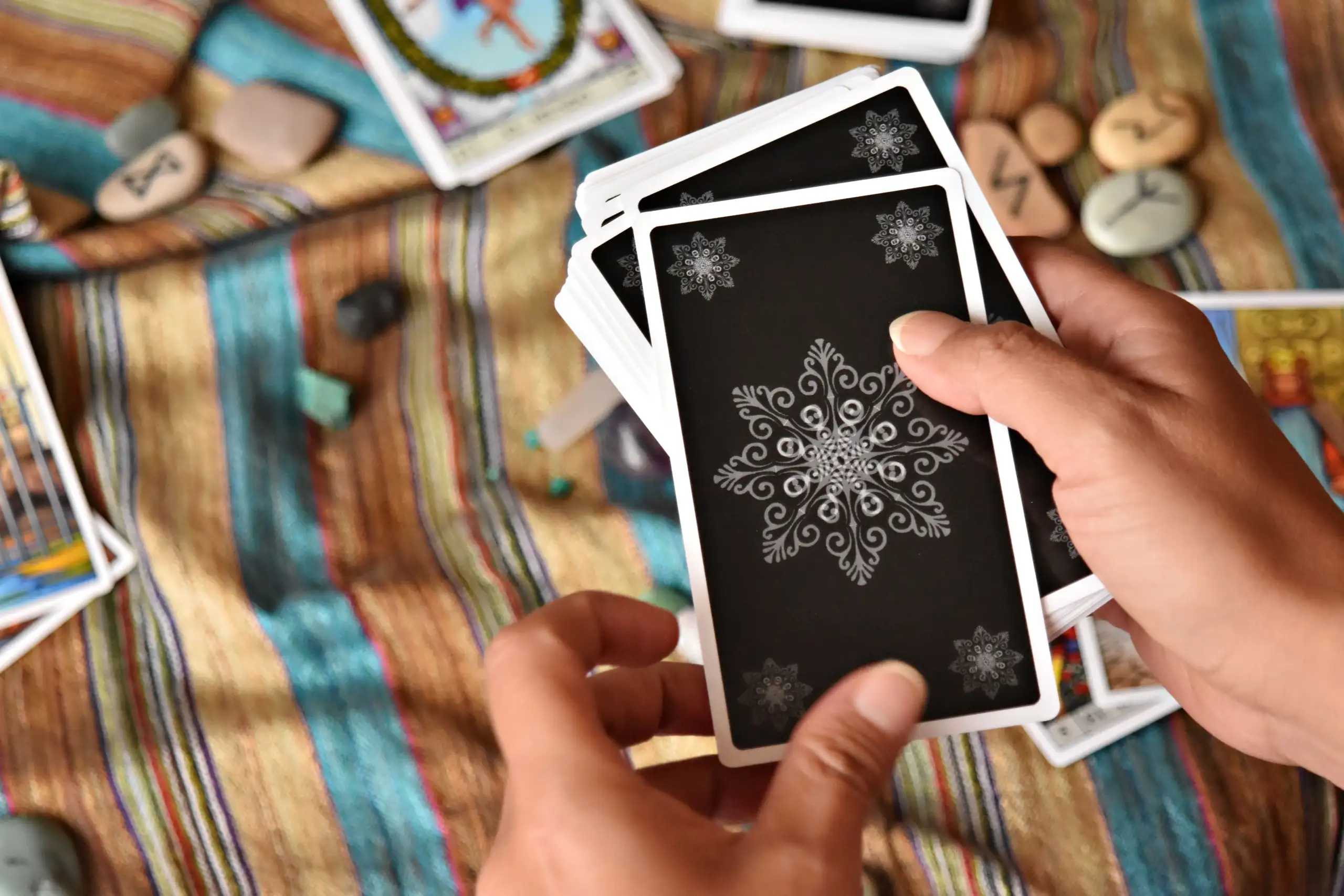
Ever have one of those weeks where your brain just won’t sit still? You’re replaying a conversation from three days ago, half-writing a text you’ll probably never send, and somehow still forgetting where you put your keys. That’s usually the moment people reach for tarot — and then immediately feel overwhelmed by the idea of a huge spread with cards everywhere. Honestly? You don’t need that. Four cards is plenty.
This isn’t some elaborate ritual. It’s the reading you pull out when you’ve got ten spare minutes and a mind that won’t quiet down on its own. No expertise required, no memorizing seventy-eight card meanings. Just four cards and a bit of honesty with yourself.
Why Four Cards Beats a Big Spread (Sometimes)
There’s this assumption that a bigger spread must mean a deeper reading. In my experience, it’s usually the opposite. Ten or twelve cards can turn into their own kind of chaos, especially when you’re already frazzled and just trying to think straight. You end up spending more energy decoding the cards than actually listening to what they’re telling you.
Four cards forces you to keep it simple. You’re not trying to map your whole year or every relationship in your life — you’re just trying to answer one question well: what’s going on, and what do I do about it? That’s a much easier thing to sit with.
What You’re Actually Asking Each Card
Lay them out in a row, left to right. Here’s roughly what each one covers.
The first card is you. Not who you’re pretending to be for everyone else — where you actually are right now, underneath it all. Sometimes it confirms something you already knew. Sometimes it says something you weren’t expecting to hear.
The second card zooms out to the situation itself, separate from how you feel about it. It’s easy to lose sight of what’s actually happening when you’re emotionally tangled up in it, so this card is basically asking: okay, but what’s really going on here?
The third one is the tricky part — whatever’s creating friction. It’s tempting to read this as purely a warning, but more often it’s pointing at exactly where you’re supposed to grow, even if that growth feels uncomfortable right now.
Then the fourth card gives you somewhere to go from here. Not a rule, more like advice from a friend who’s watched the whole thing unfold and has a decent idea what might help.
Read them together, not as four separate fortunes. Let card one lead into card two, and so on — it should feel like a short story about where you are, not four random guesses.
How to Actually Do This
Nothing complicated. Shuffle while you hold your question or your general mood in mind. Pull four cards, in order, and lay them out. Give yourself a real minute with each one before flipping to the next — your first instinct is usually worth more than whatever a guidebook says.
If a card doesn’t make sense right away, that’s completely normal. Don’t force it. Sometimes the meaning clicks later, in the middle of something totally unrelated, like folding laundry or waiting for coffee to brew.
It Doesn’t Have to Be a Big Deal
You don’t need to overhaul your whole life to feel steadier — sometimes four cards and a few honest minutes are genuinely enough. Keep this spread around for the rough mornings, the nights your thoughts won’t switch off, or right before a conversation you’ve been avoiding.
Peace rarely announces itself with a big moment. Usually it’s smaller than that — one card, then the next, until things settle just a little.
