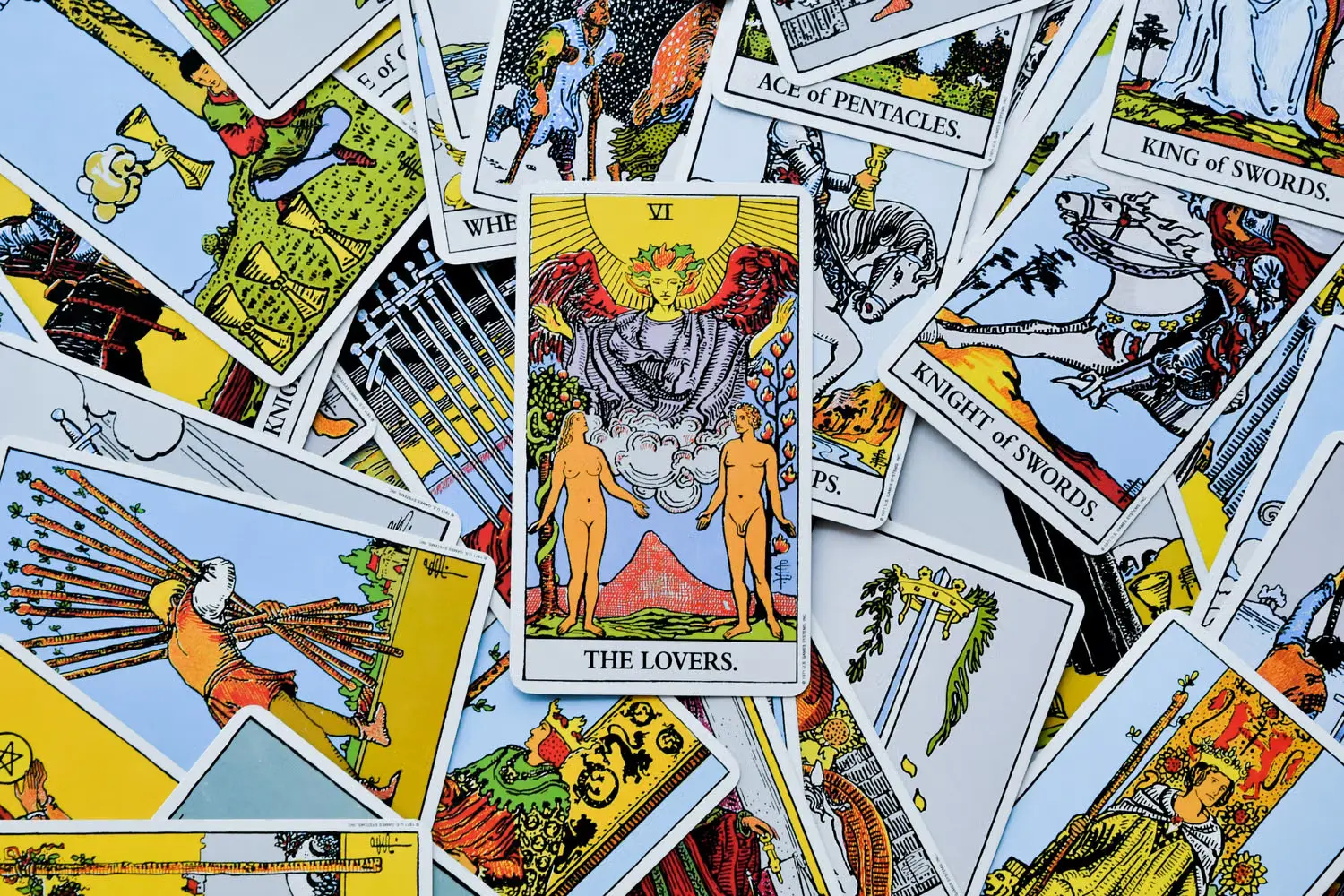
So you’ve decided to learn tarot. Good for you. Now comes the part nobody warns you about: standing in front of a wall of decks (or scrolling through page after page online) trying to figure out which one is actually worth your money.
I get asked this a lot, and honestly, the answer isn’t as complicated as the internet makes it sound. You don’t need the “perfect” deck. You need one you’ll actually pick up and use.
Why the First Deck You Pick Actually Matters
Here’s the thing most beginners don’t realize until they’ve already bought a deck they regret: some decks are built to teach you, and some are just… pretty. Nothing wrong with pretty, but if every card is covered in abstract swirls with no clear scene, you’re going to spend more time flipping through the guidebook than actually reading cards.
The decks that work best for beginners show a full picture on every single card, including the number cards. Look at the Three of Cups in a good deck and you’ll see three women dancing, celebrating, clearly having a good time. Your brain does the rest. You don’t need to memorize “three cups equals celebration” because the image basically tells you.
Still Can’t Go Wrong With Rider-Waite-Smith
I know, I know — everyone recommends this deck, and it’s kind of a cliché at this point. But there’s a reason it hasn’t been dethroned in over a century. Every card tells a story, the artwork has been picked apart and explained in probably a thousand books by now, and nearly every course, app, or YouTube tutorial you’ll come across uses this exact imagery as the baseline. Learn it once, and reading almost any other deck later becomes way easier, since most modern decks are basically riffs on it anyway.
If the old-school art style isn’t your thing (fair enough, it’s a bit stiff by today’s standards), decks like Modern Witch Tarot or Everyday Tarot keep the same meanings but with art that feels a lot more current — more diverse characters, more modern settings, less “Victorian woodcut.”
Things Worth Checking Before You Buy
Before you drop money on a deck, a few small things are worth a second look:
- Does the minor arcana actually show scenes, or just patterns of cups and swords? Scenes teach faster.
- Is there a guidebook included? You’ll lean on it more than you’d think, especially in month one.
- How do the cards feel in your hands? Too big, too flimsy, too slick — any of these can quietly kill your motivation to practice.
- Does the art actually pull you in? This sounds unimportant but it isn’t. If you like looking at the cards, you’ll practice more. If you don’t, the deck ends up in a drawer.
One Deck Is Enough (For Now)
You really don’t need to buy five decks in your first month. I know it’s tempting — new decks show up on Instagram constantly and they all look gorgeous. But switching too soon actually slows you down. Every deck speaks its own visual dialect, and jumping between them before you’ve locked in the basics just makes everything blurrier.
Give one deck a few solid months. Once the meanings start feeling familiar without you having to check the book every time, that’s your cue to branch out — maybe something nature-themed, or mythology-based, or stripped-down and minimalist, whatever catches your eye next.
A Practice Routine That Actually Works
Buying the deck is the easy part. Here’s a simple way to start using it:
- Pull one card each morning. Write down your gut reaction before you open the guidebook.
- Then check the book and see how close you were. Over time you’ll notice patterns in how you naturally read the imagery.
- Once single cards feel comfortable, try a basic three-card spread — past, present, future is the classic starting point for a reason.
Five minutes a day with this routine will teach you more than trying to cram all 78 meanings in one weekend ever could.
So, Which Deck Should You Actually Get?
If you want the honest, unglamorous answer: start with a Rider-Waite-Smith-based deck. It’s not the flashiest option on the shelf, but it’s the one that’ll actually teach you how to read. Once you’ve got that foundation down, the rest of the tarot world — and there are thousands of gorgeous decks out there — becomes a lot easier to explore.
Pick the one that feels right when you hold it. That’s really the whole secret.
